Their father had played in a band when he was younger, and by the
late ’90s he was finding ways to pass that love of music down.
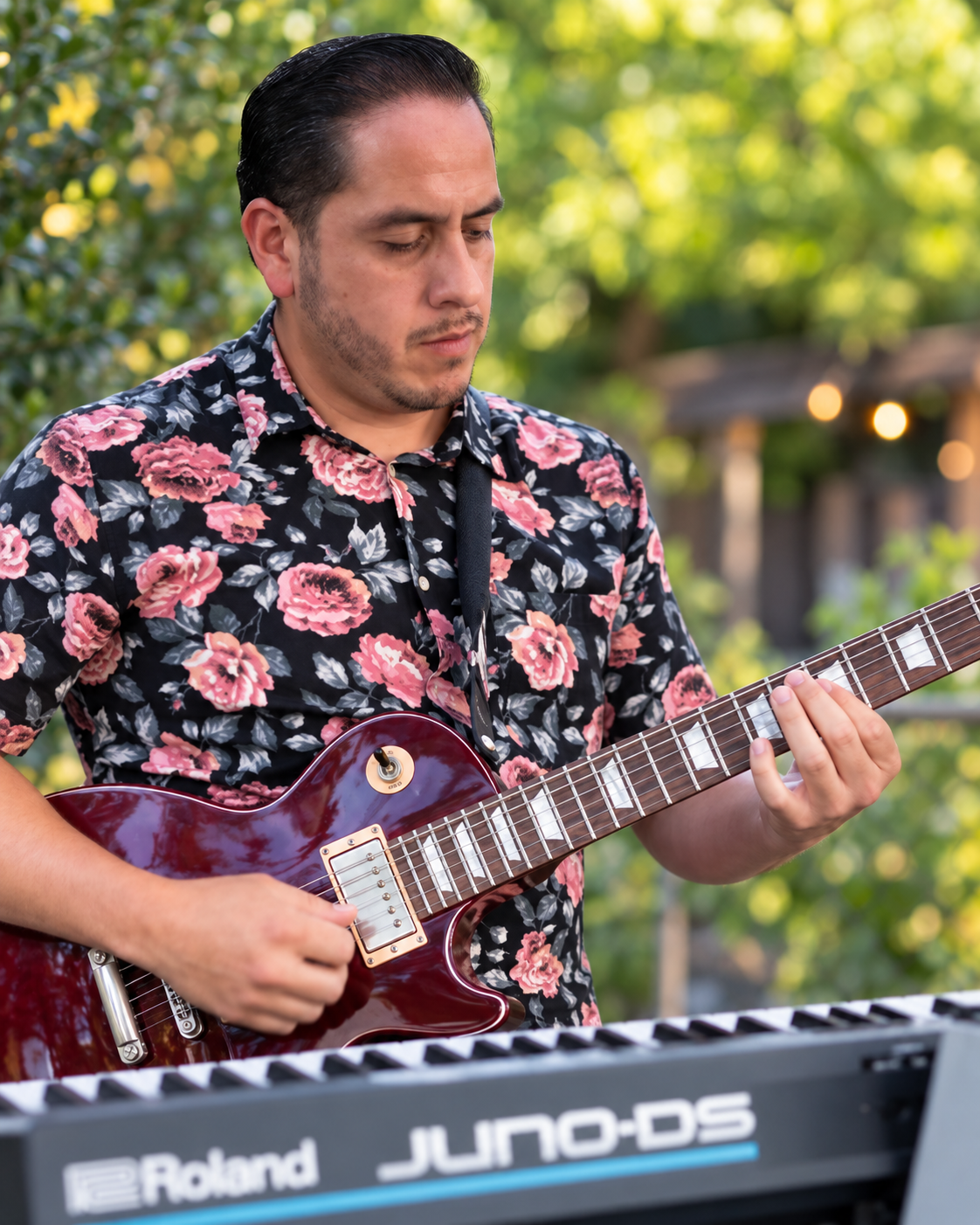
Hugo, still young and learning accordion and keyboards, regularly
found himself recruited to perform in front of family and friends.
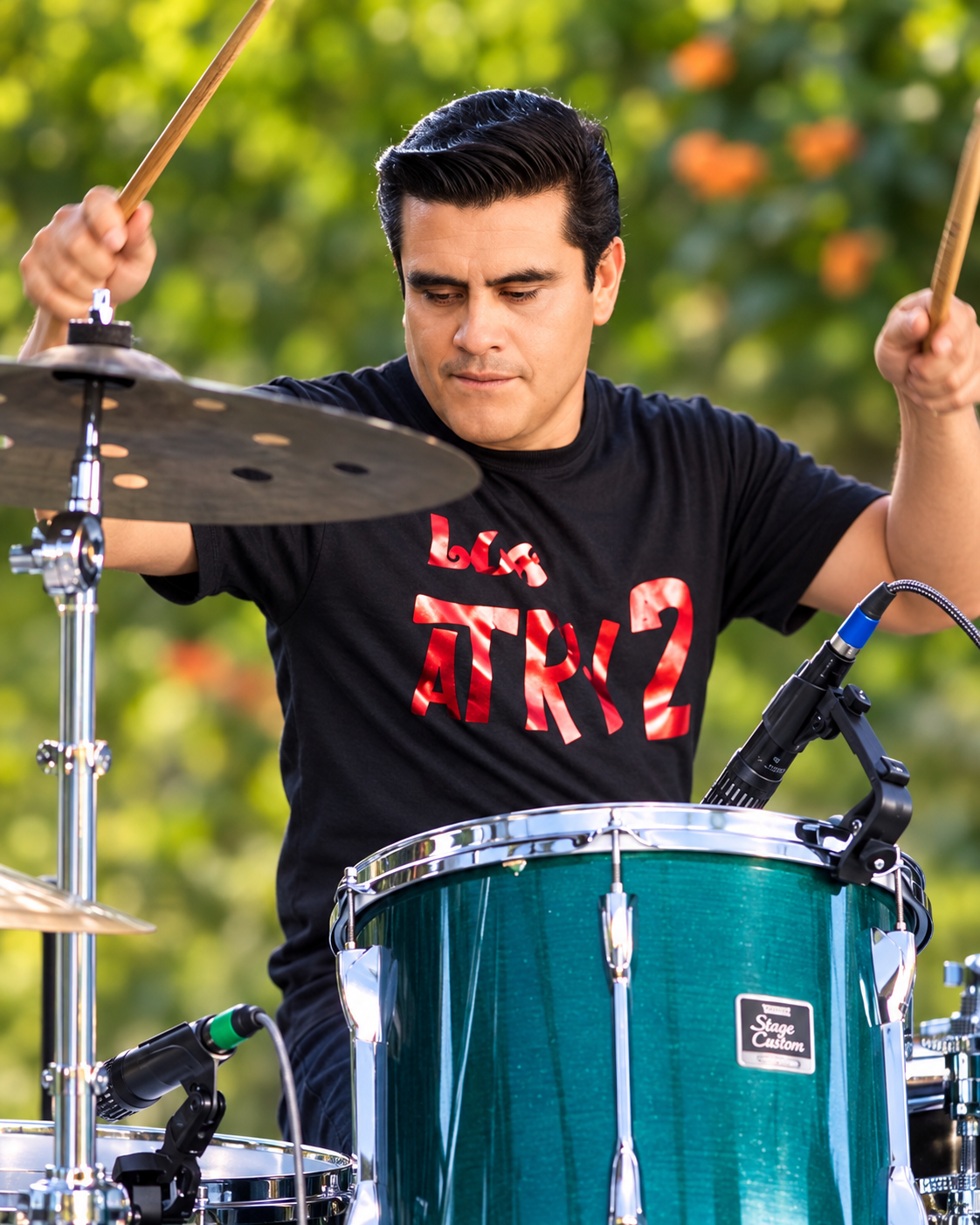
Raúl was eventually gifted a bass. César already had years of
music around him as a sonidero and was beginning to play
instruments himself.
Then came one Christmas gathering.
Lalo, a close family friend already known for
singing pretty much everywhere he went, showed up with his
acoustic guitar. Hugo was on accordion and keyboards, César on
drums, Raúl on bass, and Lalo did what Lalo always did—he sang.
Somewhere in the middle of a long night surrounded by family and
friends, the adults decided these kids were apparently a band.
Los Atrevidos was born.
There wasn’t much equipment. Recycled speakers from the brothers’
old DJ setup became the first PA. Lalo bought an electric guitar,
an amp and a microphone. César upgraded a few cymbals. Their dad
picked up a set of congas within the next few weeks.
Piece by piece, what had started as a family jam began looking
like an actual band.
For their father, it was a dream becoming real.
For Hugo and Raúl... maybe not immediately.
Neither was completely sold on the idea at first, but it didn’t
take long before they were in. Los Atrevidos began playing
quinceañeras, weddings, parties and local events, building its
identity the same way it had built its first PA: one piece at a
time.
Eventually, the brothers’ musical interests began pulling in
different directions. Raúl, increasingly drawn toward alternative
rock and rock en español, left to pursue a different sound and
brought Hugo with him into what would become
Alebrije.
And just like that, the first era of Los Atrevidos came to an end.
But the musicians didn’t.
Over the years they followed different paths through music and
life. Some played in other bands, some toured, some stepped away,
and some simply kept playing whenever the opportunity came. The
name Los Atrevidos disappeared, but the connection that created
it never completely did.
More than two decades later, another family party brought
everyone back together.
While planning a surprise birthday party for their mom, the
brothers began recruiting old friends to play.
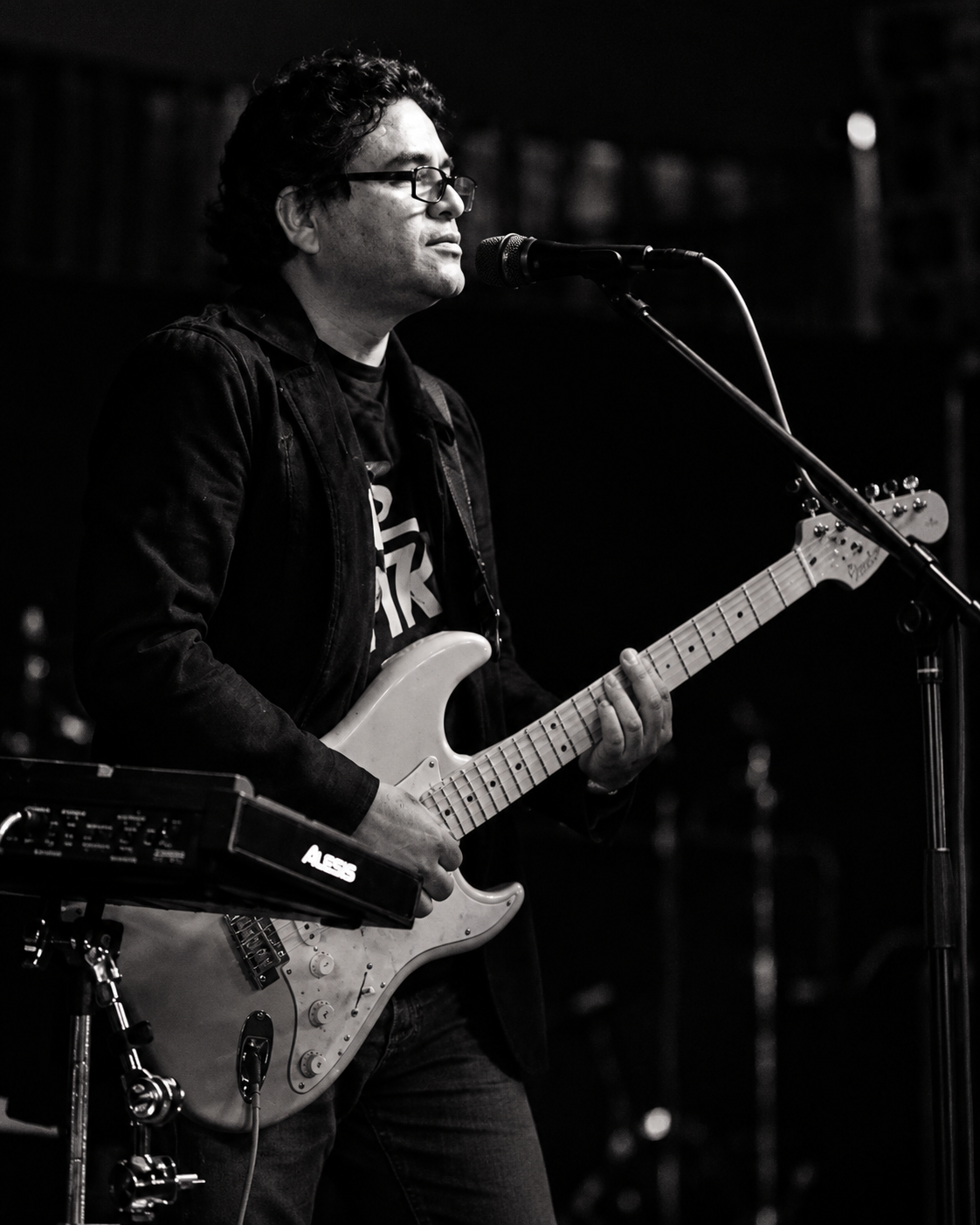
Lalo returned on vocals, longtime friend
Juanito joined on bass, Raúl moved from his
original role on bass to guitar, and the group started rehearsing
a set built largely around the ’50s and ’60s rock & roll they
loved.
It was supposed to be a party.
Instead, they accidentally started a band again.
Juanito eventually stepped away for personal reasons, but by then
something had already clicked. This wasn’t simply a reunion of
the old Los Atrevidos. Everyone had accumulated another
twenty-plus years of influences and experience.
So the old name stayed—but with a twist.
Los Atrevidos became ATRV2: Atrevidos, version 2.0.
And the family began growing again.
Hugo’s friend Steve originally came around
simply wanting to jam. He picked up the accordion and has been
learning ever since, bringing with him a genuine love for
old-school norteño that added another character to the band’s
sound.
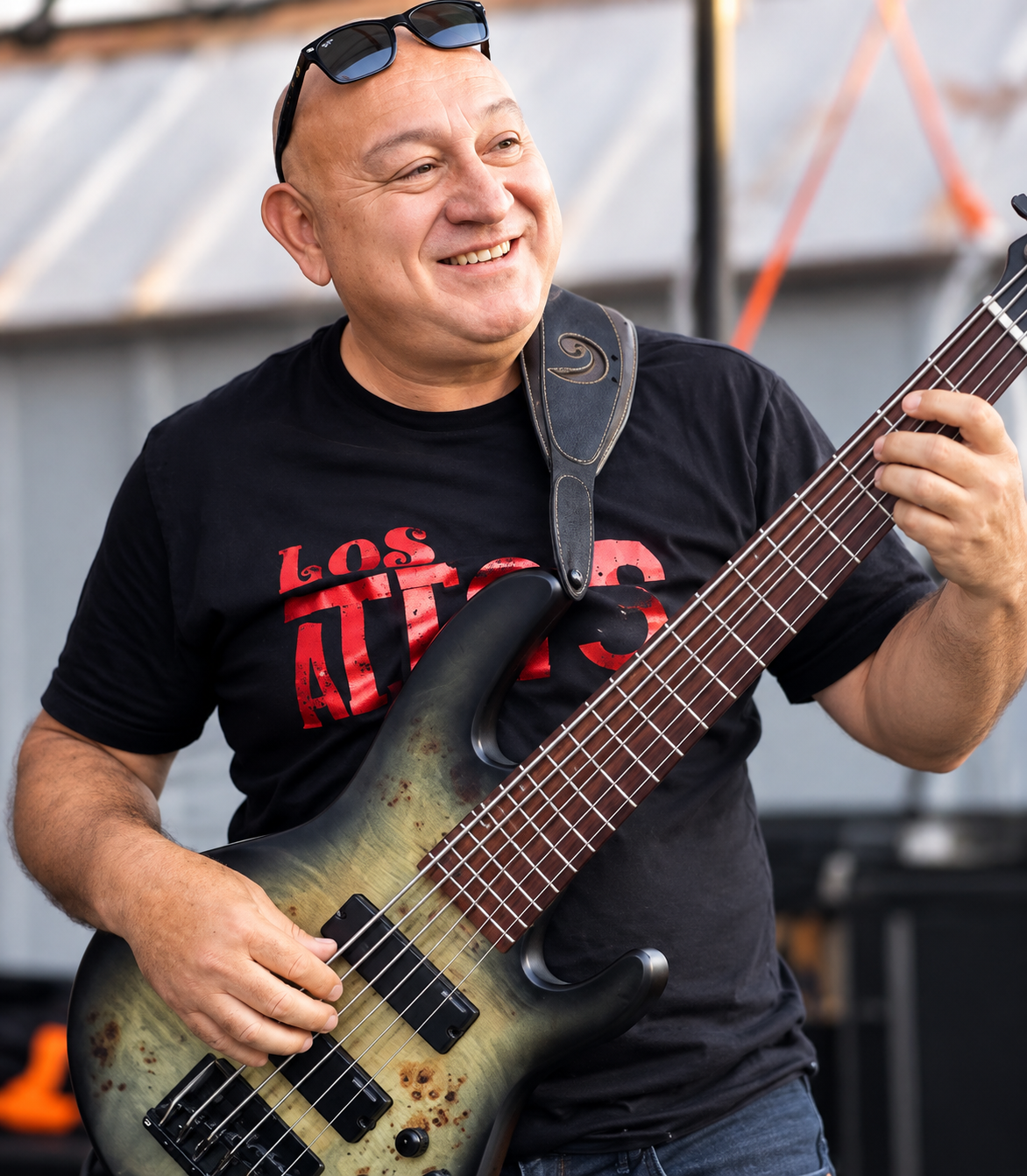
Ramiro later came aboard on bass, bringing deep
musical knowledge, strong technique and an unmistakable ’80s
influence. Through Ramiro came his friend Rena,
whose roots are in metal—think Iron Maiden—but whose versatility
lets him jump from a heavy guitar part to norteño or cumbia
without blinking.
That mix is ultimately what ATRV2 became.
The band was never built around a single genre. César brought the
cumbias, salsa and romantic ballads. Raúl brought ’90s
alternative and rock en español along with a love for early rock
& roll. Hugo became the musical chameleon connecting seemingly
unrelated styles. Steve brought old-school norteño, Ramiro
brought the ’80s, and Rena brought the heavier edge.
And Lalo—the friend with the acoustic guitar who was singing at
that Christmas party all those years ago—remains part of the
story that started it all.
ATRV2 isn’t an attempt to recreate Los Atrevidos exactly as it
was.
It’s what happened when the people who started playing together
as kids came back decades later with completely different musical
lives behind them—and decided to see what all of it sounded like
in the same band.